
SSL/TLS Certificates: the silent foundation of the internet that too often fails
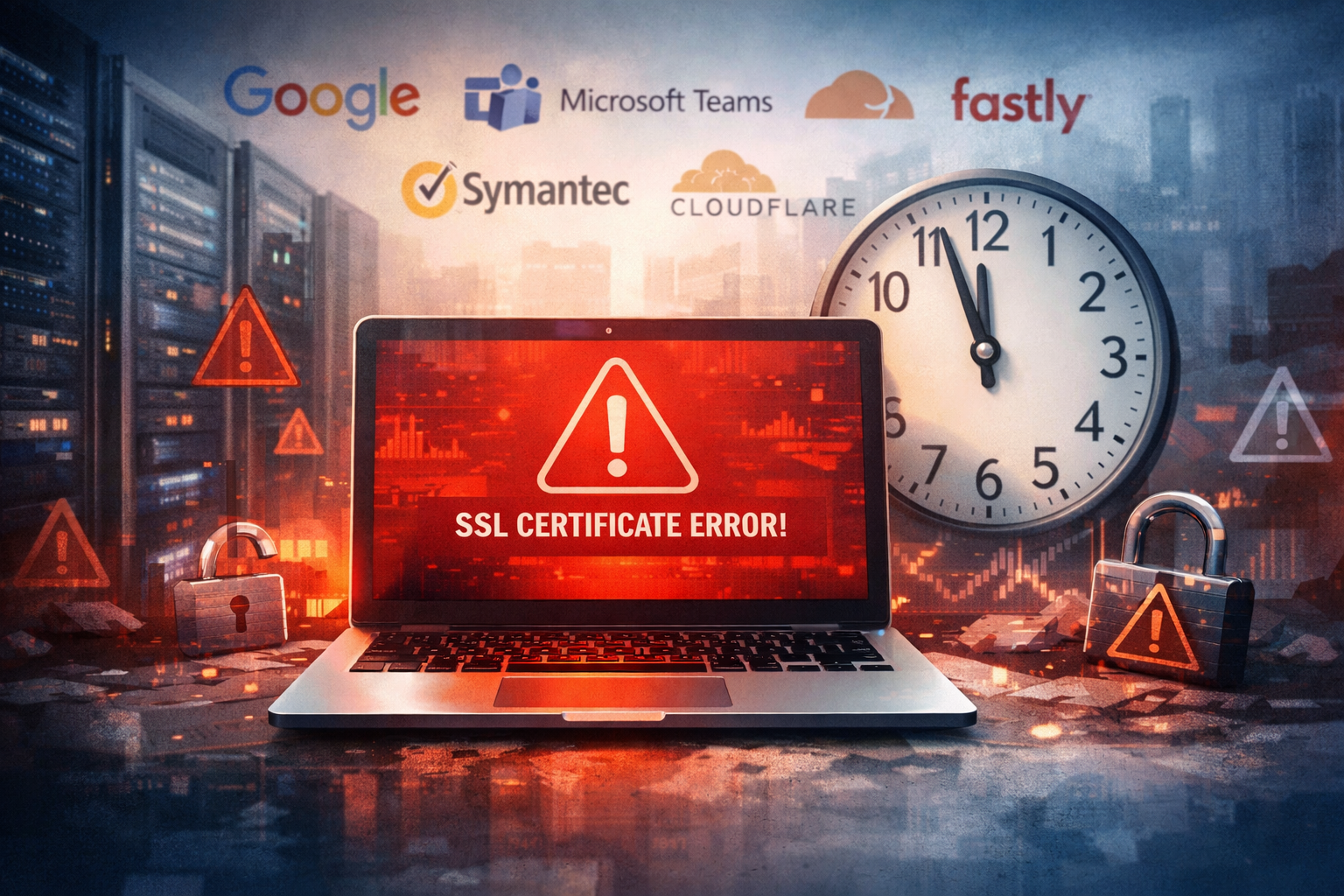
SSL/TLS certificates are like power in a data center — we only notice them when they suddenly go missing. The green padlock in the browser stands for security, trust and continuity. And yet, every year we see spectacular outages and compromises that prove the issue isn’t cryptography — it’s management.
History repeats itself
Back in 2011, the collapse of the Dutch CA DigiNotar shook the entire internet. A breach, hundreds of forged certificates, lack of basic security procedures — the result was simple: loss of browser trust and the company’s bankruptcy.
In the same year, Comodo suffered a compromise of its certificate issuance process. The problem wasn’t in the encryption algorithms, but in manual, error‑prone verification.
A few years later, Symantec — a giant of the industry — issued thousands of unauthorized certificates. The outcome? Google and Mozilla withdrew trust, and thousands of companies had to perform emergency certificate replacements across their infrastructure.
The common denominator in these incidents: people, manual processes and lack of visibility.
Not just “in the past” — problems persist today
You might think this is history. Unfortunately, recent years show otherwise.
In 2023–2024, Google experienced TLS certificate issues for services like YouTube and Workspace. ACME automation glitches and validation overloads triggered HTTPS warnings for millions of users. Automation existed — but monitoring, controls and a fallback plan were missing.
Similarly, in 2023 a certificate lapse disrupted Microsoft Teams for thousands of organizations. Certificates expired, meetings failed, and the recommended fix was… manual admin intervention.
Even infrastructure leaders aren’t immune:
- Cloudflare (2022) — edge and wildcard certificate management mishap,
- Fastly (2021) — global TLS incident affecting major sites worldwide.
Small mistakes, big consequences
Beyond headline incidents, daily reality in thousands of companies includes:
- expired certificates,
- incomplete chains,
- weak or outdated ciphers,
- environment inconsistencies (prod / staging / edge),
- no single place to answer: “where are our certificates and when do they expire?”
The impact? SEO drops, browser security warnings, service downtime and stressed on‑call nights.
The problem isn’t technology — it’s approach
These cases lead to one conclusion: SSL/TLS management is too often treated as a side task, scattered across teams, scripts and spreadsheets.
Yet:
- certificates have a lifecycle,
- expiry is faster (90 days is becoming standard),
- they exist in hundreds of places: servers, load balancers, cloud, CDNs, network devices.
The more manual work, the higher the chance something gets missed.
The question to ask
How many of these incidents could have been predicted, detected earlier or outright prevented if:
- all certificates were visible in one place,
- real monitoring existed beyond calendar reminders,
- automation was controlled, not “set and forget”,
- manual interventions were minimized?
More and more teams realize SSL/TLS isn’t a technical detail — it’s a critical pillar of business continuity deserving a dedicated, disciplined approach.
Certificates don’t suddenly break. They simply expire — exactly when no one is looking.
Related articles
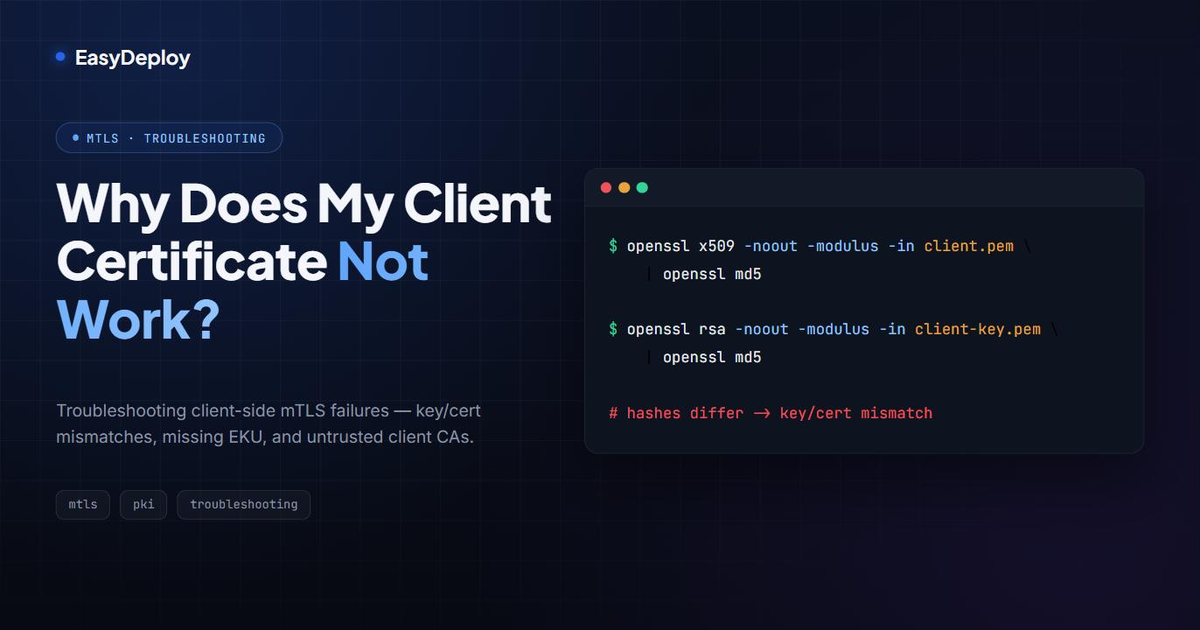
Why Does My Client Certificate Not Work? Troubleshooting mTLS Client-Side Failures
A troubleshooting guide for client certificates that fail mTLS authentication — key/cert mismatches, missing Extended Key Usage, untrusted client CAs, and how to debug each one.
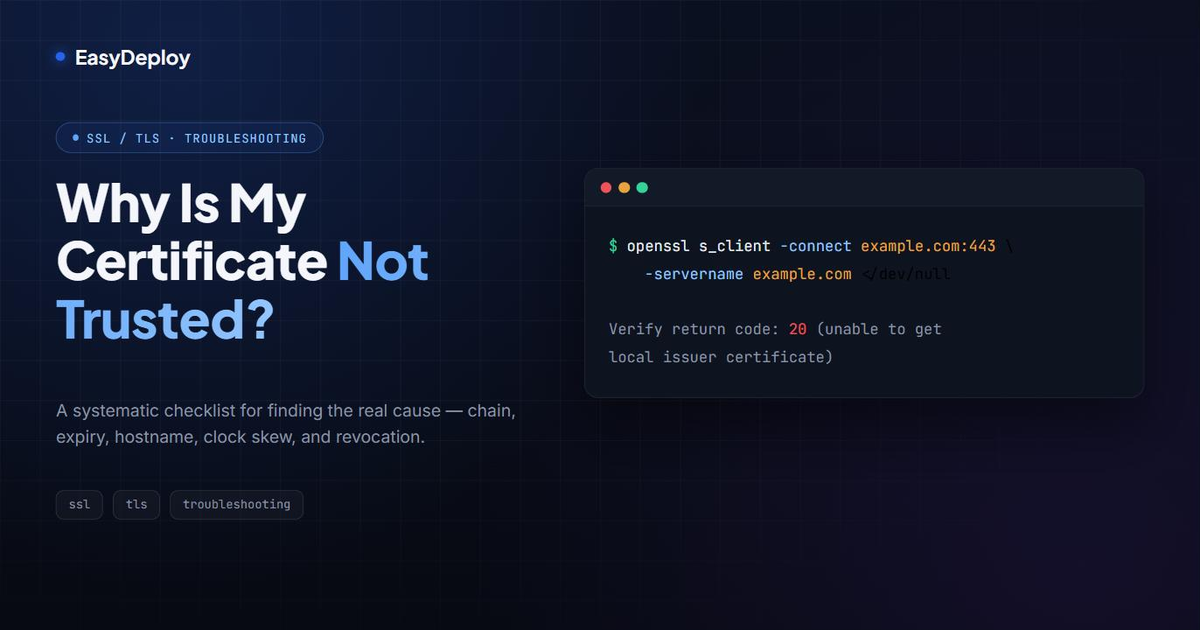
Why Is My Certificate Not Trusted? A Systematic Troubleshooting Checklist
A step-by-step way to find out why a certificate shows as untrusted — chain, expiry, hostname, clock skew, and revocation — with the exact OpenSSL commands to check each one.
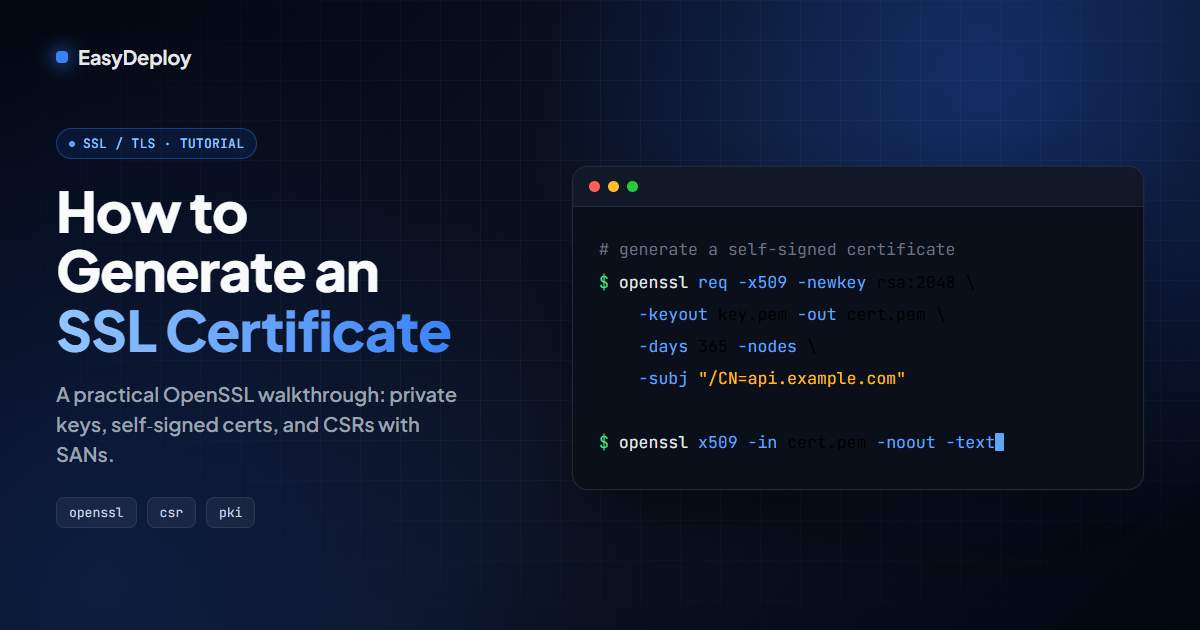
How to Generate an SSL Certificate: OpenSSL Step-by-Step Guide (Self-Signed & CSR)
A practical, copy-pasteable guide to generating SSL/TLS certificates with OpenSSL — private keys, self-signed certs, CSRs, and Subject Alternative Names.